
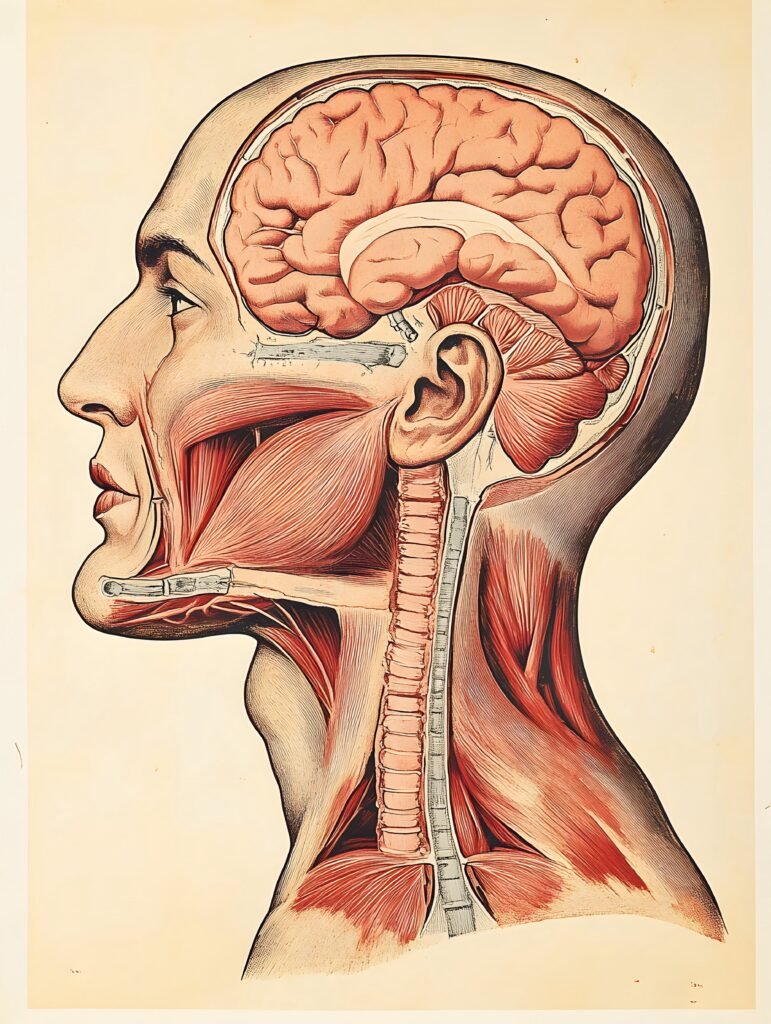
Have you ever stopped and thought about how incredible the human voice is? I never really paid attention to the biology behind it until I began learning more about how sound is created and controlled. I’ve always loved to sing, but diving deeper into the anatomy of the voice helped me appreciate the beauty of it from a scientific point of view. Here’s my story about exploring the human voice—its structure, how it makes sound, and why it’s so important to care for it.
My First Encounter with the Voice Box

The first time I looked at a diagram of the larynx (a fancy name for the voice box), I was surprised by how intricate it all was. I knew the Adam’s apple existed, but I didn’t realize that it was part of a larger system of cartilages, muscles, and bones working together to create sound. The hyoid bone, the cricoid cartilage, and even the epiglottis—these structures were all part of the delicate dance that lets us speak and sing.
At first, I was overwhelmed, but as I started reading about the functions of these parts—like how the glottis needs to open and close at just the right time to create vibrations—it began to make sense. Each part has a unique role in making sure that air flows smoothly, creating the foundation for sound.
Understanding the Sound Cycle
One of the coolest things I learned was how our voice is powered by our breath. When I learned about the aerodynamic myoelastic model of phonation, I was amazed at how quickly the glottis opens and closes to create those vibrations. Imagine this: each second, the glottis opens and shuts hundreds of times! This rapid cycle of pushing air through, then closing the glottis, is what creates sound waves that we can manipulate into melodies, words, and tones.


But what really blew my mind was how we control pitch. I started to think about how I could hit high notes or low notes while singing. Turns out, it’s all about the frequency of the glottal vibrations and the length of the glottis. For example, when I sing a “A” at 440 Hz, my glottis is vibrating 440 times per second! Understanding this made me more conscious of how I use my vocal cords when I sing.
My Exploration of Vocal Registers
Now, here’s where it gets interesting: the difference between chest voice and head voice. If you’re a singer like me, you’ve probably noticed how some notes feel different—some are fuller and stronger, while others feel lighter and softer. The chest voice feels powerful, like the speaking voice, and it resonates in my chest. On the other hand, the head voice feels more delicate and resonates in the head. The most fascinating part was learning that each of these voices is controlled by different muscles in the larynx.
For chest voice, the thyroarytenoid muscle, which is located along the vocal cords, plays a huge role. This muscle allows me to produce the deeper, fuller notes. For head voice, the cricothyroid muscle, which is located on the outside of the vocal cords, steps in. This muscle helps me reach those high, light notes. I didn’t know this at first, but it clicked when I started experimenting with these registers during singing practice.
Experimenting with My Own Voice

I decided to do a little experiment on my own to understand how these different registers work. Using a rubber band (acting as my vocal cords), I stretched it to mimic the process of vocal vibration. By moving my fingers (representing the thyroarytenoid muscles) closer and farther apart, I could hear how the pitch changed. The more I stretched the band, the higher the pitch went—just like when I sing higher notes with my head voice!
I also tried using the cricothyroid muscle by stretching the band more and trying to hit those high notes. It was amazing to see how two different muscles could create the same pitch, but with such a different sound. It made me realize how much control we really have over our voices.
Caring for the Voice
As I learned more about how the voice works, I also realized how important it is to take care of it. I never thought much about it before, but now I know that vocal cords can develop nodules if they’re overused or abused. I definitely don’t want that to happen, especially since I rely on my voice for singing and speaking. So, I started warming up my voice before singing or giving presentations, just like athletes stretch before a workout. This not only helps me perform better, but it also keeps my vocal cords healthy in the long run.
Conclusion: Biology Meets Music
Learning about the human voice has been a game-changer for me. It’s not just about singing or talking—it’s about understanding the complex system of muscles and air that make it all possible. From controlling pitch with my glottis to learning how to switch between chest voice and head voice, I’ve gained a whole new appreciation for my voice and the science behind it.
If you ever want to know more about your voice and how it works, I highly recommend diving into the biology of it. It’s like discovering a hidden world inside your body, and it’s amazing how biology and music come together to create the magic of sound.