
My Journey Bringing Music to Patients at Epic Care
Saesha Sharda 2026
I’ve never been someone who fits into a single box. The way I see it, creativity and a STEM mindset aren’t opposing forces—they’re just two different ways my brain solves problems and connects with the world. At Cal, that plays out every day, whether I’m tackling upper-division bio, grinding through MCAT prep, or arranging vocals with the Cal Jazz Choir. Applying a creative lens to analytical problems (and vice versa) is just who I am.
So when I started thinking about healthcare, bringing those two sides of my personality together wasn’t a stretch—it was the obvious next step.
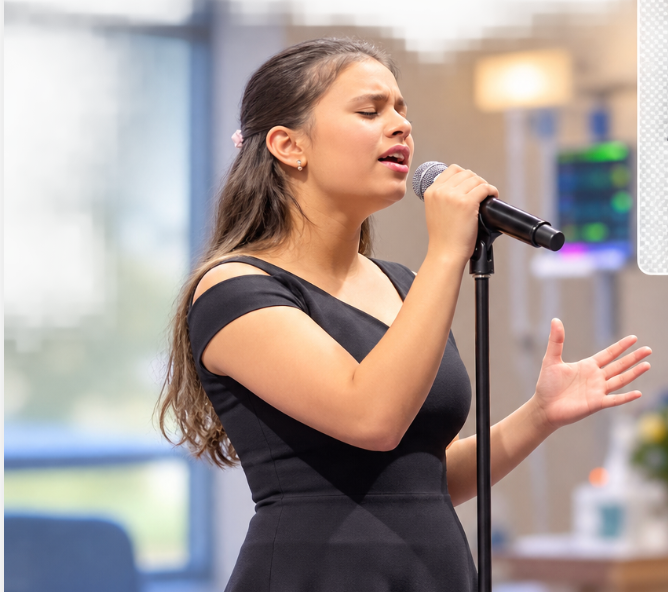
That mindset led me to Epic Care over in Emeryville, where I started a music program for cancer patients undergoing treatment. My goal was simple: bring a little comfort and human connection to people going through an intensely heavy time.
Naturally, my initial attempt was pretty over-engineered.
I leaned hard into my structured STEM brain and showed up with a full syllabus: I was going to teach basic music theory, break down vocal mechanics, and guide everyone through structured group singing.
It took me about two seconds to realize I had missed the mark.
Patients coming off a grueling round of treatment do not want another structured lesson. They don’t want to concentrate, learn a new skill, or feel pressured to perform. They just want to breathe. They want to hear a song they recognize, zone out for a second, and feel like a normal human being for twenty minutes.
My creative side needed to step back and listen to what the room actually required.
So, I adapted. I pivoted from teaching music to just sharing it. We switched to light vocal warm-ups and familiar tunes where patients could join in, request their favorite tracks, hum along, or literally just close their eyes and listen. No pressure, no expectations.
That small adjustment changed everything.
The Reality Check (and the Empty Room)
Of course, fixing the format didn’t magically fill the seats overnight.
For the first few weeks, I would trek out to Emeryville, set up, and… sit in a completely empty room. Nobody showed up. I printed flyers, sent emails, tried pitching it every way I knew how, and still ended up sitting there alone. It’s a humbling feeling to prep a setlist and end up serenading empty chairs.
Then, finally, my first patient walked in.
That single session made all the ghost towns of the previous weeks worth it. It reminded me that whether you’re designing a clinical program or solving a research problem, iteration and persistence are everything. Slowly, word got around, and people actually started coming.
More Than Just Notes on a Page
What caught me off guard was how fast these sessions stopped being about “music” and started being about people.
A classic song would suddenly unlock a memory from thirty years ago. A melody would turn into a twenty-minute conversation. People who hadn’t said two words all morning would smile when they recognized a track from their youth.
Sometimes we sang. Sometimes we just talked. And honestly, sometimes we just sat there, glad to be in a room where the word “cancer” wasn’t the center of gravity.
In pre-health classes, we spend so much time looking at healthcare through numbers, lab values, and clinical outcomes. And look—that analytical foundation is vital; it’s why I love the science. But being in that room showed me how creativity and empathy complete the equation: healthcare is also about protecting a patient’s humanity. Music isn’t a cure, but it creates a space for comfort and community right alongside the medicine.
Where This Goes Next
Using my analytical mind to explore creative solutions is what drives me, and I want to take this project further.
I’m starting to ask bigger questions from a clinical standpoint: Can structured music-based interventions tangibly reduce patient anxiety and stress during treatment? What role does musical familiarity play in emotional regulation? How does group singing impact a patient’s subjective well-being compared to passive listening?
With proper clinical guidance and IRB oversight, I hope to explore these questions through actual research down the line to see how supportive oncology can integrate creative, evidence-based therapies more effectively.
The Takeaway
If my time at Cal (and in the clinic) has taught me anything so far, it’s this:
- Listen before assuming. My STEM brain wanted to build a structured system, but the patients showed me what they actually needed.
- Iterate and adapt. Changing my approach wasn’t abandoning the idea—it was refining it.
- Show up anyway. Pitching to empty rooms for weeks sucked, but showing up consistently is the only reason that first patient ever walked through the door.
- Focus on the small wins. I can’t alter a patient’s diagnosis with a song, but I can change how thirty minutes of their afternoon feels.
At the end of the day, this whole experience just solidified why I want to be a physician. Medicine isn’t just about mastering the science of disease—it’s about using every tool you have, analytical and creative alike, to care for the person living with it.
Until then, I’ll be balance-checking my lab notes, heading to choir practice, and keeping my ears open.